
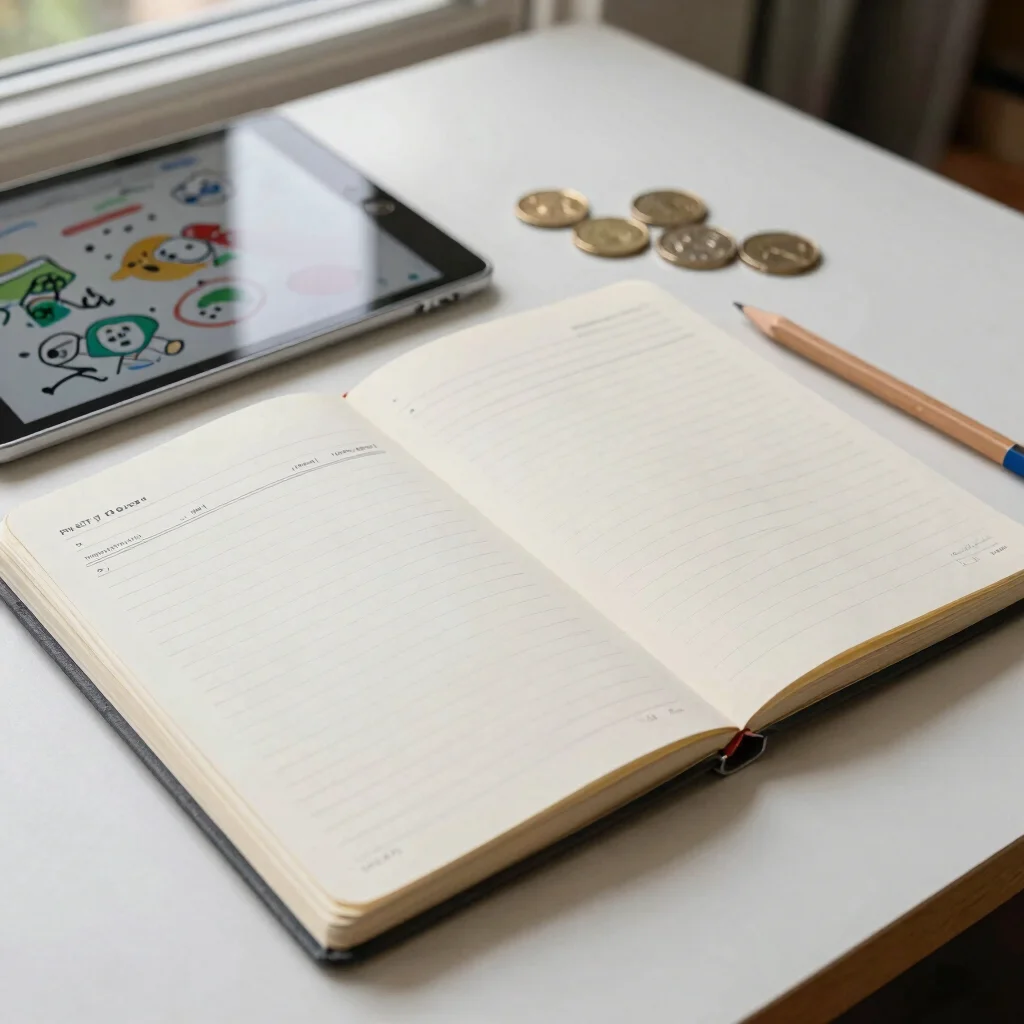
It is tempting to imagine that every interest needs to become a business: a digital-art commission, a story project, a game-related video, an LLM experiment. But creative work already asks for attention, and adding income goals can change how that work feels. I prefer to treat a possible income stream like a side quest: worth exploring, not a promise that it will pay off.
Name the Experiment
Before starting, write down what you are actually testing. For example, you could set aside a few evenings to assemble a small portfolio, or draft one short piece and see whether the process is sustainable. A specific experiment gives you something to review besides a vague hope that the hobby will eventually earn money.
Track More Than Revenue
Keep a simple note of time spent, direct expenses, and what you learned, alongside any money that comes in. A project can bring in a little income and still take more effort than you want to repeat; another might not earn anything yet but help you build a skill or a body of work. Neither outcome needs to be dressed up as a guaranteed path.
Protect the Hobby Too
It helps to decide in advance how much time or money you are comfortable putting into an experiment, then pause and review before expanding it. That boundary makes room for interests that stay personal, which matters when you enjoy moving between art, stories, games, and finance. The practical takeaway: test one small idea, keep honest notes, and let the evidence—not the excitement of a new plan—decide what comes next.