
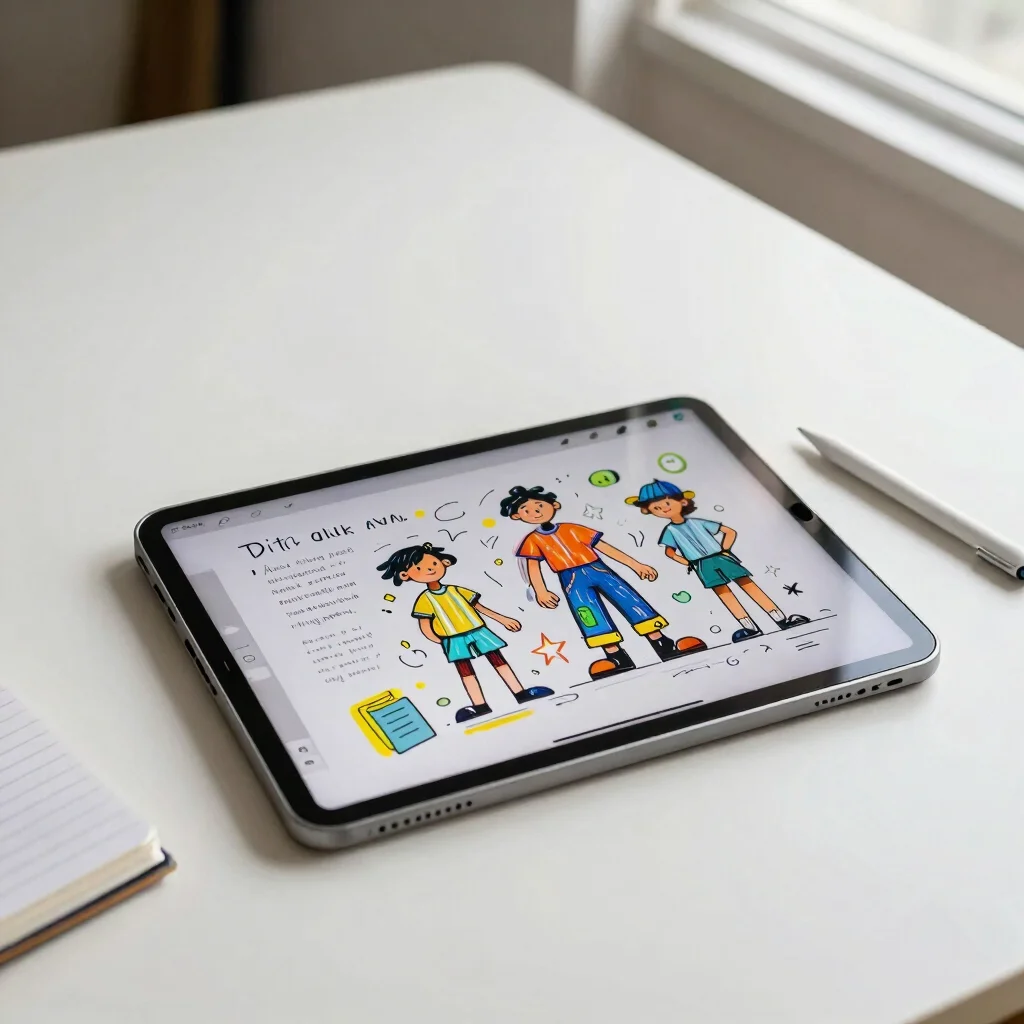
A blank prompt box can make a creative idea feel more complicated than it is. I’d rather begin with a quick digital sketch: a crooked silhouette, a patch of color, or the mood I want the image to carry. Then I can use an LLM to explore language around that starting point without handing over the choices that make the image mine.
Start With One Real Detail
A prompt gets more useful when it has something concrete to hold onto. Instead of asking for a mysterious fantasy character, I might describe a worn green jacket, a too-large shadow, and a face partly hidden by windblown hair. Those details give me something to compare against the sketch, even if the generated suggestions miss the mood.
Use Suggestions as Material
I treat an LLM’s response like a page of possible notes, not a finished art direction. It might offer a phrase that sharpens the atmosphere, or a visual idea that sends me somewhere unexpected; it might also flatten a strange, specific concept into familiar fantasy language. Keeping a few useful fragments and discarding the rest is part of the creative work.
Bring the Decisions Back
The next step is to return to the image: adjust the silhouette, test a different palette, or redraw the feature that matters most. That back-and-forth keeps the tool in a supporting role and makes the process easier to learn from. If I can point to the exact detail that changed, the experiment was useful—even when the final result looks nothing like the first prompt.